
Teeth Whitening
Whether to whiten at home with a kit or leave it to a dentist is the decision most readers make first, and often without asking anyone. A kit is easy to buy and a bright smile is easy to want before an event. Dentists' own association, through its site www.ada.org, lists three kinds of whitening: in-office bleaching procedures, dentist-supplied products for use at home, and over-the-counter (OTC) whiteners.
Questions to ask before you whiten
Each line below says what the question is about and where a dentist should take over.
- How long does in-office laser whitening take? This is a dentist's procedure, so the useful question is how to plan around it.
- Which bleaching ingredients do whitening products use? Read the label first, then ask a dentist about anything you do not recognize.
- What is the safest way to whiten teeth? The cautious answer starts with a dentist, not with a kit.
- Will whitening change the color of crowns or fillings? Existing dental work is a question for your dentist before you start.
- Should I talk to a dentist before whitening at home? The page explains why a short conversation comes before the purchase.
- Can aggressive bleaching damage teeth? Whether stronger is better is a question for a dentist, not for the box.
- Who should not have teeth whitening? Read this one before anything else on the list.
- How fast do gel-filled whitening trays work? Speed is the number readers chase, and the page weighs it against the risk.
- What are the most common side effects of teeth whitening? Know the effects before the event so you are not surprised by them.
- Which foods and drinks stain teeth? This is the one question you can handle on your own.
- Why does whitening cause tooth sensitivity? Persistent discomfort is a reason to call a dentist.
- Do whitening treatments stop new stains? Ask what a treatment can promise before you pay for it.
- How long do at-home whitening results last? A dentist can tell you what to expect for your own teeth.
- How much can whitening toothpaste lighten teeth? Read the claim on the packaging skeptically and ask a dentist what it means for you.
Common mistakes and costly ones
The common mistake is skipping the dental conversation because a product is easy to buy. The costly mistake is ignoring what your own mouth already tells you, such as existing dental work or sensitive teeth. Colgate covers the causes of tooth sensitivity after whitening and how to manage it, and WebMD maps the range of strips, gels, toothpaste and bleaching options.
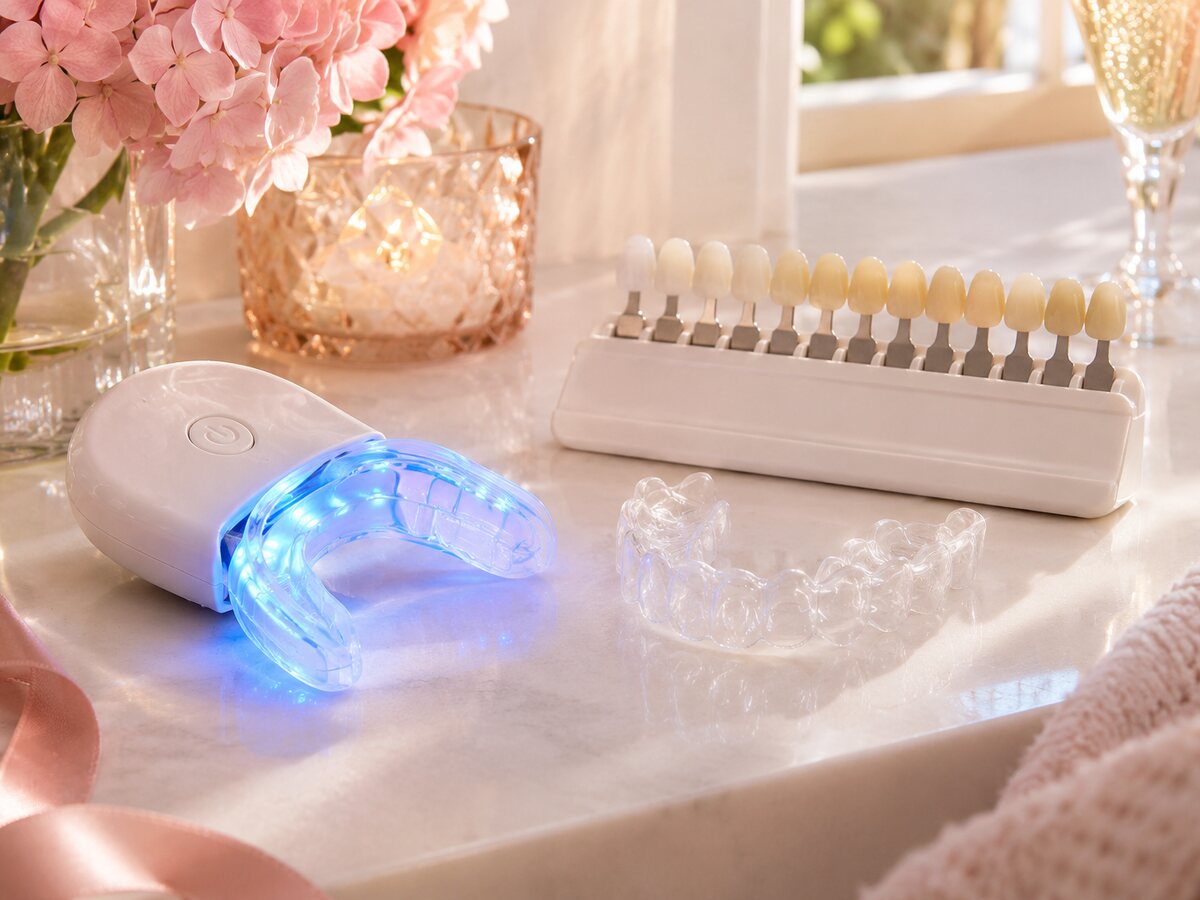
For a plain safety read, one health-library article asks Is Teeth Whitening Safe (and Does It Work)? Read it with your own dental history in mind and bring what you learn to your dentist.
The next stage before an event
Whitening is one finishing touch among several. Once the plan for your teeth is settled, read spray tan prep and aftercare, then go back to event prep timing to fit it all into the calendar.